

If you've built a business, you’ve likely created more than just income—you’ve built something unique: a recognizable brand, a proprietary process, or even a product others wish they had thought of first.
What many business owners overlook is that these intangible assets can—and should—be treated as part of a comprehensive wealth strategy.
In a recent Business Talk episode, Meghan McNulty explored how professionals can legally protect their intellectual property. But this companion piece asks a different question:
Once it’s protected, how are you planning to transfer or benefit from it?
From Legal Safeguard to Legacy Strategy
IP protection is just the start.
Without a plan, your trademarks, copyrights, and proprietary processes can:
- Go underused or unenforced after you step away
- Get stuck in probate if not properly transferred
- Lose value—or create confusion—during succession
That’s where estate and wealth planning come in.
Why It Matters: The Rise of Intangible Assets
You’re not just building a business—you’re building value in ideas. And you're not alone.
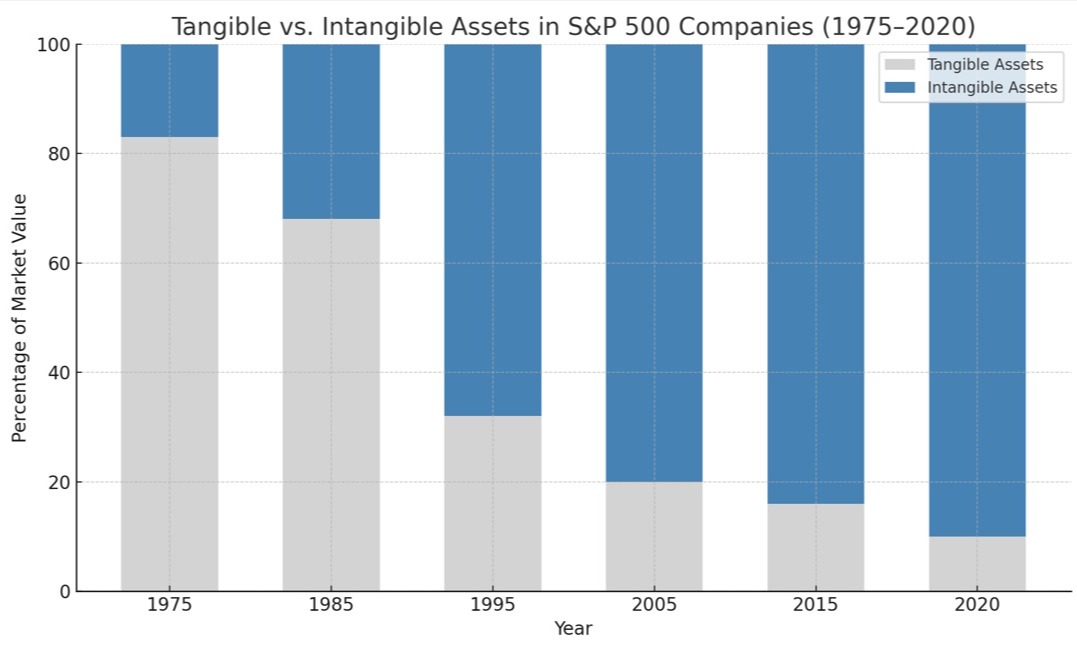
- 90% of the market value of S&P 500 companies is driven by intangible assets, up from 32% in 1985. (Source: Ocean Tomo, via CRI Advantage)
- 65% of Fortune 500 companies' total worth is attributed to IP assets, with some companies exceeding 90%. (Source: U.S. Patent and Trademark Office (USPTO)
- IP-intensive industries contribute over $7.8 trillion to the U.S. GDP and support 63 million jobs. (Source: Heer Law)
Across the economy, intellectual property is no longer an afterthought—it’s the core of enterprise value.
IP Belongs in Your Estate Plan
Whether you’ve developed a trade secret, licensed content, or built a brand around your name, those assets can:
- Be valued and transferred
- Generate future income (e.g., royalties)
- Be included in trusts or succession plans
But without proactive planning, those opportunities can be lost.
How This Plays Out in Practice
Even if you’ve protected your intellectual property legally, these examples show why financial and estate planning still matter.
- Trademarks: Your estate plan should spell out who inherits them—and how they can (or can’t) be used.
- Licensing Deals: Royalties can be structured into a retirement or legacy income stream.
- Personal Brands: If your business is built on your identity, your succession plan needs to address continuity or closure.
Take Inventory of Your Legacy
Ask yourself:
- Have I documented my intellectual property?
- Is it clearly included in my estate or exit plan?
- Have I spoken with a financial advisor about monetizing or transferring my IP?
Wealth Advisory Lab Can Help
At Wealth Advisory Lab, we help business owners connect the dots between legal protection and long-term wealth.
That includes aligning your IP strategy with your broader goals—retirement, succession, family legacy, or even exit planning.
Let’s talk. Because the ideas you’ve built could outlive you—if you plan for it.